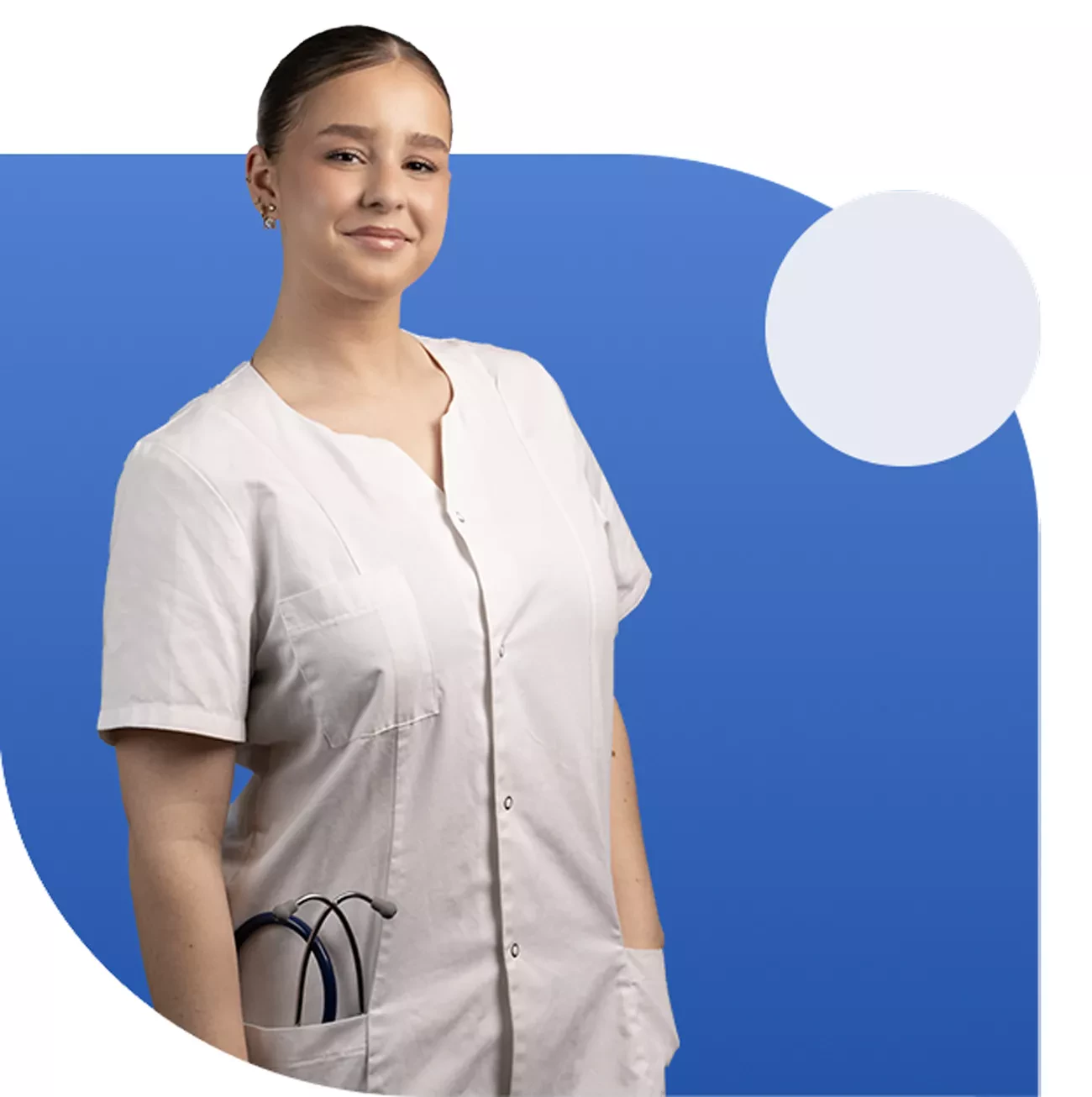
Becoming a nurse
Nurses play a key role in the healthcare system, caring for and advising people of all ages.
Their expertise enables them to assess situations, provide care and coordinate interventions to meet patients’ needs.
Why choose a career in nursing?

Supporting others and making a difference
Support people through important moments in their lives and make a tangible contribution to their wellbeing and health.
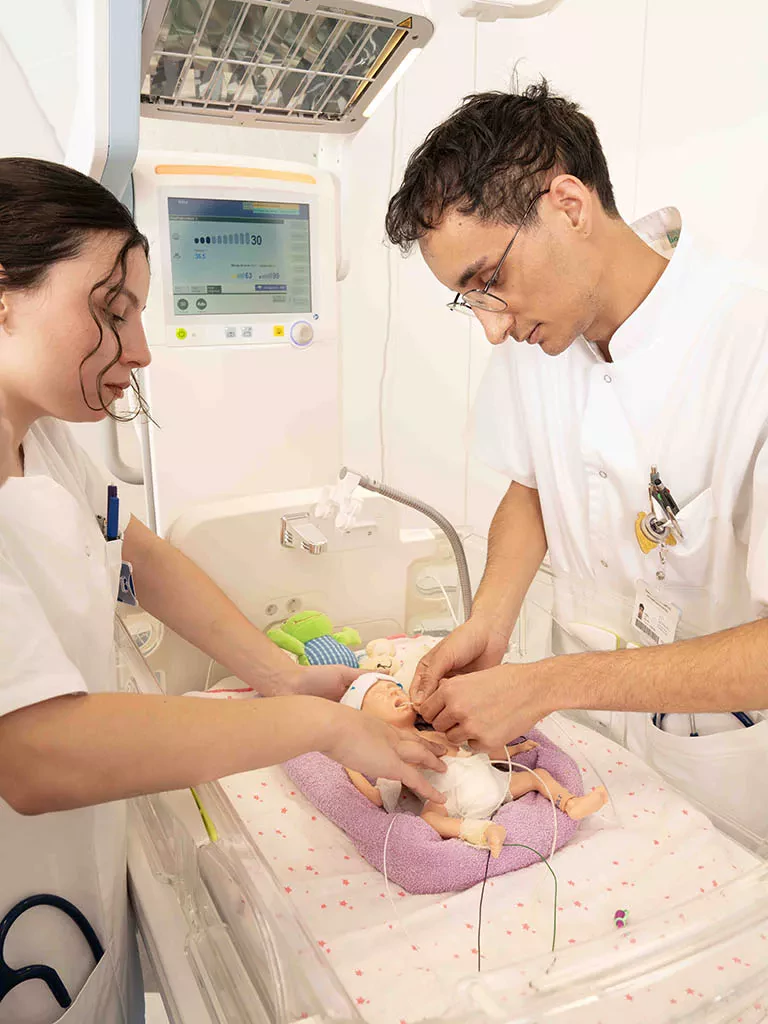
Developing recognised expertise
Combine scientific knowledge, clinical skills and interpersonal skills to deal with a variety of situations and make professional decisions.
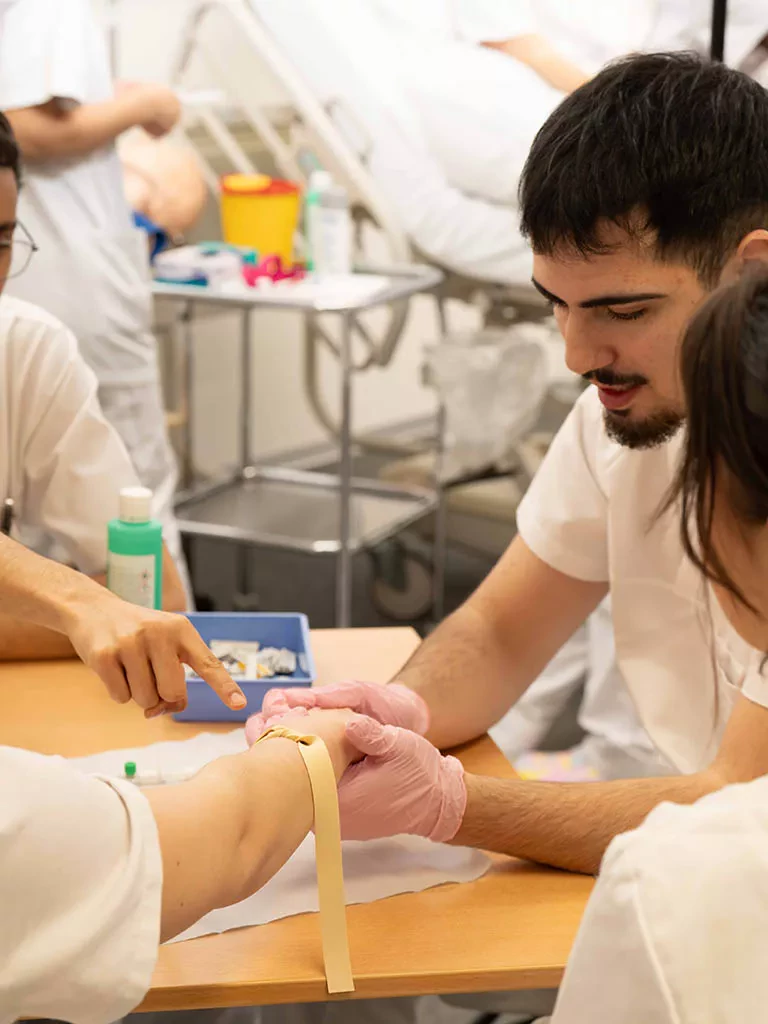
Building a career that suits you
Work across a wide range of fields, develop new areas of expertise and advance your career throughout your working life.
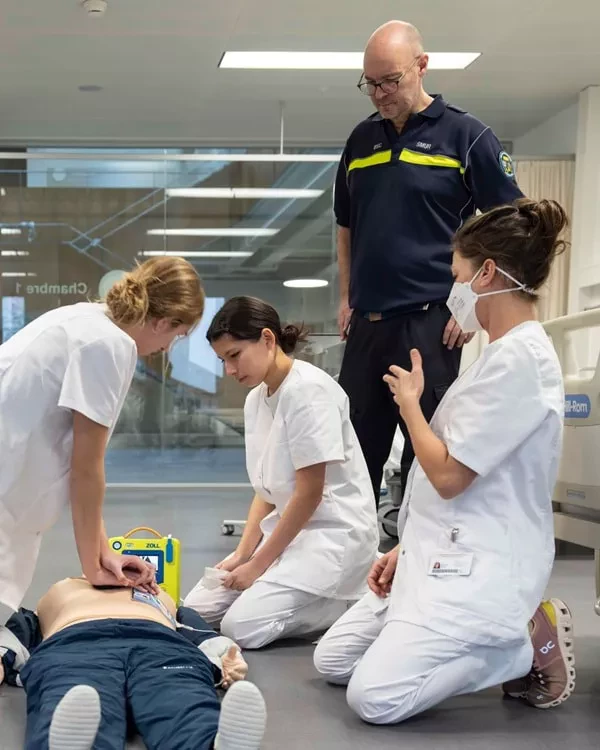
Where do nurses work?
Almost everywhere
How do you become a nurse?
Build your professional career with training courses tailored to your goals.
Foundation year in Health Studies
Preparing for university-level studies in healthcare.
Bachelor’s degree in nursing
Train for a varied and meaningful career.
Postgraduate education and continuing professional development
Specialise and develop your skills.
Find out more about postgraduate education and continuing professional development >
Career development
Developing your career and taking on new responsibilities.
Frequently Asked Questions
Healthcare assistant and nurse: what are the differences?
Healthcare assistant and nurse: what are the differences?
Community health and care assistants (known by the French acronym ASSCs) and nurses work closely with patients, but their responsibilities and levels of autonomy differ.
The community health and care assistant (ASSC) provides basic care, supports patients with activities of daily living activities or while they are ill, and carries out certain medical procedures under delegated authority. Find out more about the role ofASSC and the ASSC training programme on the School of Community Care and Health website.
Nurses provide more complex care and are also responsible for assessing health situations, planning care, making clinical decisions and overseeing the overall management of patients. The HES nursing programme leads to a Bachelor’s degree and prepares students for a profession involving significant responsibilities, with opportunities for career progression in clinical practice, management, research, teaching or advanced practice.
ASA or nurse – what are the differences?
ASA or nurse – what are the differences?
Care assistants (French acronym: ASA) and nurses both contribute to patients’ wellbeing, but their roles, responsibilities and levels of training differ.
The ASA primarily provides basic care and assists people with activities of daily living activities , under the supervision of nursing staff. They also contribute to support, care and domestic activities, working mainly alongside community health and care assistants (ASSCs), social and educational assistants and domestic care managers. Find out more about the profession ofASSC and the ASA training programme on the website of the School of Nursing and Community Health Website.
Nurses provide more complex care and are also required to assess health situations, plan care, make clinical decisions and ensure the overall management of patients. The HES nursing programme leads to a Bachelor’s degree and prepares students for a profession involving significant responsibilities, with opportunities for career progression in clinical practice, management, research, teaching or advanced practice.
ES-qualified nurses and HES-qualified nurses: what are the differences?
ES-qualified nurses and HES-qualified nurses: what are the differences?
Both the ES (Higher Vocational School) and HES (University of Applied Sciences) courses qualify graduates to practise as nurses. The main difference lies in the level of the qualification and the career prospects.
The ES programme is heavily practice-oriented and enables students to acquire the technical skills required to enter nursing.
The HES programme leads to a Bachelor’s degree and is recognised at university level. It enables students to acquire all the technical skills and go beyond them, including research, the analysis of nursing practices and the development of other skills such as project management. It also enables students to progress to postgraduate studies (CAS, DAS, MAS, Master’s) and to gain access to roles or institutions that require a University of Applied Sciences (HES) qualification.

What our students and alumni say
Do you have any question about the nursing profession?
Our teams are on hand to help you choose the right training course.
By phone
The office is open from Monday to Thursday from 08 am to 5 pm, and on Fridays until 4:30 pm.
+41 21 556 40 00