The recent history of La Source
2022–2026
Strengthening our contribution and securing our long-term development
La Source is enhancing the appeal of the nursing profession, expanding postgraduate pathways and advancing research in response to changes in the healthcare system. Teaching methods are evolving to meet the requirements of professionals and society, notably through the development of more flexible learning formats.
The launch of microcertifications, in partnership with HEIG‑VD(the School of Engineering and Management Vaud), introduces short, cumulative and certified courses, enabling personalised learning pathways. Research and innovation play a central role in this process, supporting the institution’s long-term growth.
2020-2021
The pandemic is highlighting the importance of nursing skills
In 2020, in response to the COVID-19 pandemic, the course rapidly adapted through the use of hybrid teaching methods, supported by a strong institutional commitment and the dedication of students during their practical placements.
The Beaulieu building was mobilised to host a COVID-19 vaccination centre, under the responsibility of the Canton of Vaud (Cantonal Crisis Management Team), with medical and operational support from the University Hospital of Lausanne (CHUV) and the La Source Clinic. The School actively contributed to this initiative alongside its other partners.
On 28 November 2021, the ‘For Strong Nursing Care’ initiative was approved by the people and the cantons, marking a significant recognition of the role of nurses in the healthcare system. Making the nursing profession more attractive has become a key priority, in line with this development and the needs of the healthcare system.
2018 – 2019
Opening of the Beaulieu site: a simulated hospital at the heart of the learning experience
In September 2018, La Source Institute and School of Nursing opened its new campus in Beaulieu, designed as an integrated environment serving undergraduate and postgraduate students, staff and interprofessional collaboration. The site includes a simulated hospital, enabling complex clinical situations to be replicated in conditions close to reality, as well as specialised simulation rooms, modular learning spaces, offices, communal areas and a social space designed to encourage interaction.
It also houses strategic initiatives such as the SILAB (Source Innovation Lab), dedicated to experimentation and innovation, and the senior-lab, which focuses on healthy ageing and participatory research with older people.
This new environment embodies an integrated approach that combines undergraduate and postgraduate education, research and service provision, while maintaining close links with professional practice.
2017-2018
Delivering projects that address societal challenges
In 2017, La Source joined the cross-border Autonomie 2020 project, which aims to develop innovative solutions to support the independence of older people, in collaboration with French and Swiss partners. In the same year, the School strengthened its partnerships with organisations working in the field (notably with Vitalab Vaud) and developed initiatives to promote interprofessional collaboration.
The Alter Ego project led to the creation of an innovative portal dedicated to preventing and detecting elder abuse, reflecting La Source’s commitment to society.
In 2018, several flagship projects reinforced this positioning. These included, the roll-out of virtual reality (through a project with UbiSim) to train students in safe, immersive environments. The launch of the Senior-Lab, an interdisciplinary initiative dedicated to healthy ageing, brought together research, practice and a community of older people.
2014–2016
Changing practices through innovation
Educational innovation becomes a key focus with the establishment of a simulated hospital, ‘Le Seb’, in the Sébeillon neighbourhood, alongside the development of immersive learning tools. Simulation technologies and interprofessional approaches are transforming learning methods. Applied research is being strengthened in line with the requirements of professional practice.
2010–2013
Developing knowledge and career paths
La Source is expanding its postgraduate programmes and advancing its research activities. In 2013, Switzerland’s first CAS in Clinical Nursing Assessment exemplified this move towards specialisation. The institution is reinforcing its contribution to the development of nursing practice and the healthcare system.
2006–2009
Securing academic recognition for the profession
The transition to European standards (the Bologna Process) has shaped the programmes. In 2009, the introduction of the HES-SO Bachelor of Science in Nursing, worth 180 ECTS credits, formalised the tertiary level and strengthened the profession’s national recognition.
2002–2005
Establishing La Source as a long-term stakeholder in the commercial property sector
The integration of the nursing programme into the HES‑SO in 2002 established La Source Institute and School of Nursing within the Swiss higher education landscape and strengthened its academic standing. The diploma awarded by the Swiss Red Cross has been replaced by a Bachelor of Science in Nursing, in line with the Bologna Process and the international recognition of qualifications.
This development responds to a growing demand for qualified staff and the increasingly complex requirements of the healthcare system’s needs. We are adapting our curricula and expanding our research and service activities in line with these challenges.
Changes to the premises
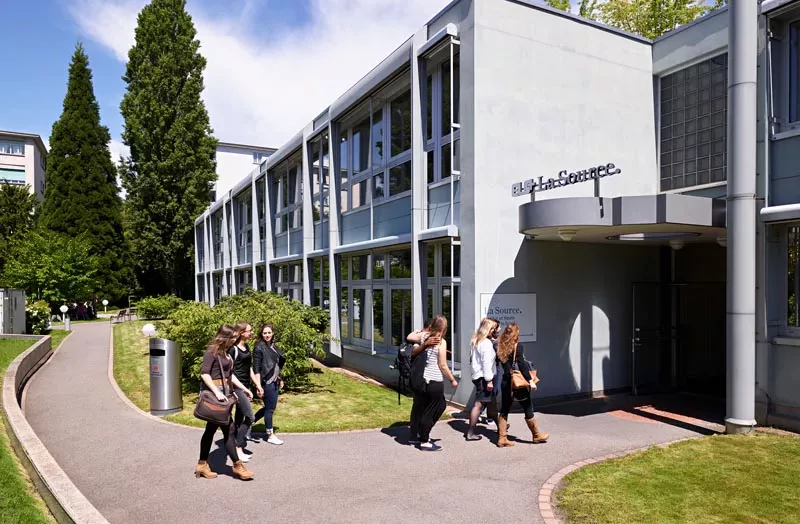
Vinet (since 1867)
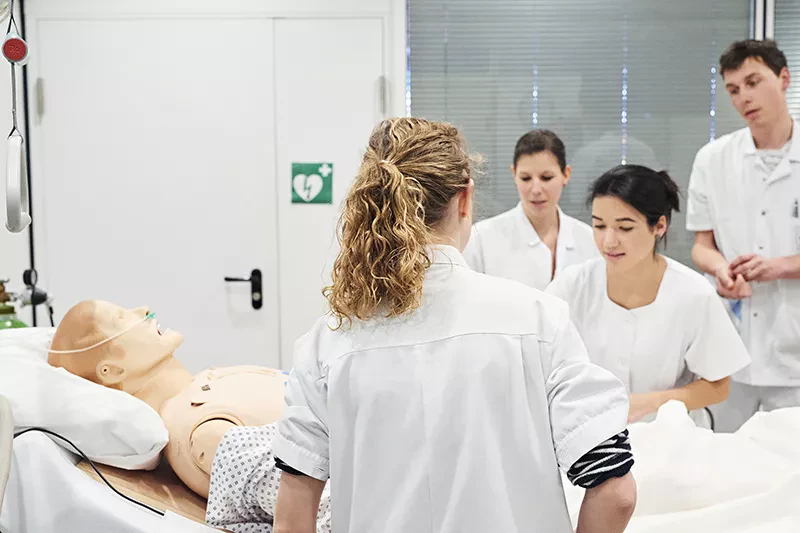
Sébeillon (2012–2018)
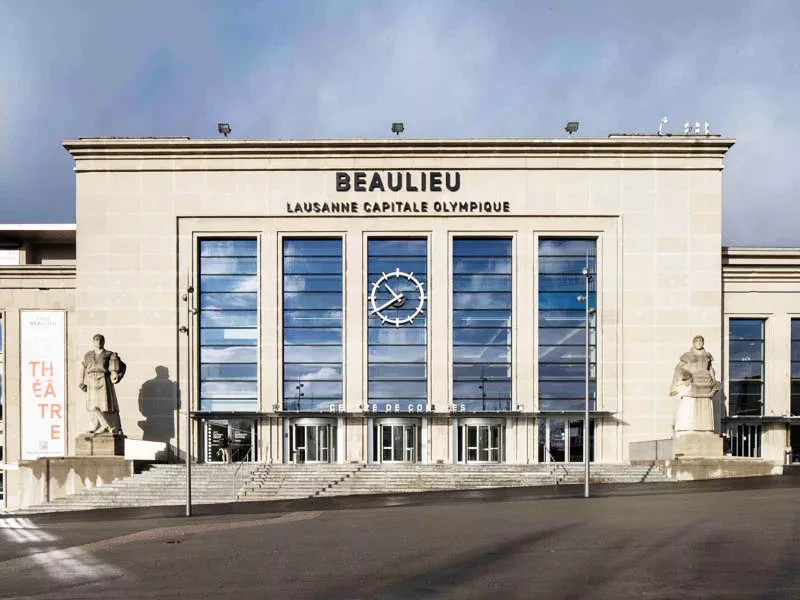
Beaulieu (since 2018)
History
From its founding to the end of the 20th century
4 November 1859
Opening of the School
The school opened its doors on 4 November 1859, under the name École normale de garde-malades, on the initiative of Countess Valérie de Gasparin and her husband Agénor. Unlike Florence Nightingale, Valérie de Gasparin did not practise nursing herself. Her primary concern was to professionalise female carers, who at that time were members of religious orders at that time. The aim was now to train professionals who would not only be competent and paid, but also free to practise according to their own conscience, with complete independence of mind.
Neither para-religious nor para-medical, the School was nevertheless shaped by the pastors of the Vaud Free Church of Vaud who led it during its first 30 years, as well as by the doctors who taught there, later joined by the ‘instructors’.
Beginning with a training course that last just four or five months, the School developed modestly and gradually. At that time, the concept of a professional care worker was unknown to the general public
1882
More than 200 working women
Despite competition from the Deaconesses of Saint-Loup, who had a long-standing presence in both education and hospital care, by 1882 there were already 203 active professionals from La Source, out of the 295 trained up to that point.
1890
Establishment of the La Source Foundation
To ensure the school’s long-term future, Valérie de Gasparin established La Source Foundation in 1890. She set up this foundation at Villa La Source in Lausanne and endowed it with sufficient funds. As early as 1891, a dispensary and a clinic known as "de Beaulieu" were also opened; this would later become La Source Clinic. Whilst Florence Nightingale made the School an annexe of the hospital, Valérie de Gasparin wanted a school that had a hospital as its annexe. The Foundation’s articles of association stipulate that the School remains independent of any hospital institution. Dr Charles Krafft, a pioneer of appendectomy, was appointed director of the School, at the instigation of Dr César Roux, a member of the Foundation’s board.
Late 19th century
lengthening the training course
From 1895 onwards, the duration of the training was extended to eight months, then, towards the end of the 19th century, to three years, including two years of practical training. In 1896, Dr Krafft challenged Pastor Roehrich at the Swiss Congress on Women’s Interests, held in Geneva, arguing that nurses should receive a scientific education rather than one centred on strict obedience to the doctor.
Early and mid-20th century
The turning point
The concept of training secular nurses began to gain ground in Switzerland with the establishment of the Lindenhof School in Bern (1899) and the Pflegerinnenschule in Zurich (1901).
From 1910 onwards, the nursing profession evolved and freed itself from the supervision of the medical profession through its own professional associations, which merged to form the ASI(Swiss Nurse Association) in 1978.
When the First World War broke out, the Sisters of La Source joined military field hospitals, such as that run by Alexis Carrel in Compiègne, close to the front line. Between 1939 and 1945, 600 of them were called up.
From 1923 to 1999, the training programmes were supervised and accredited by the Swiss Red Cross, for which the School served as the French-speaking Swiss centre for nurse training.
In 1929, La Source introduced a post-diploma course for public health nurses, followed in 1991 by a course in interdisciplinary approaches to gerontology and geriatrics. From the 1950s onwards, La Source has expanded the scope of its training programmes in line with developments in medical specialisms, whilst also placing greater emphasis on the humanities and social sciences.
1976
La Source admits its first male student.
The 1990s
The 1990s saw the arrival of teachers with higher education qualifications and the creation of a Research and Development Unit (URD). The aim was to produce specialised knowledge that was not merely the ‘lower or residual level of a dominant body of knowledge’. The emergence of nursing as an academic discipline, which originated in North America, prepared La Source for the introduction of university-level education to come, with programmes designed and led by nurses.
La Source Institute
Tasks beyondthose conferred by the status of a University of Applied Sciences (HES) status are entrusted to La Source Institute, which was founded in Paris in 2000 and subsequently relocated to Lausanne in 2007. It serves as the School's private arm. Its role is to promote local and international networking, relations with the Swiss Red Cross, and running the European branch of the International Secretariat of Nurses in the French-speaking world (SIDIIEF), of which La Source is a co-founder alongside the Ordre des infirmières du Québec.
Jacques Chapuis (Director from 2006 to 2022) has been a member of the Supreme Assembly of the International Committee of the Red Cross since 2012.

The Directors of La Source
Véronique de Goumoëns
Acting Director (since 2026)
Stéphane Cosandey
2022 - 2026
Jacques Chapuis
2006 - 2022
Christiane Augsburger
1988 - 2005
Earlier Directors
Micheline Boyer (1926-2003): 1977 - 1988
Charlotte von Allmen (1922-2010): 1964 - 1977
Gertrude Augsburger (1901-1994): 1952 - 1964
Pierre Jaccard (1901-1979): 1940 - 1952
Maurice Vuilleumier (1881-1940): 1922 - 1940
Charles Krafft (1863-1921): 1891 - 1921
Antoine Reymond (1824-1908): 1863 - 1890
Jean Panchaud (1822-1862): 1862 - 1863
Albert Müller (1811-1878): 1859 - 1862