Placing learners at the heart of realistic scenarios through simulation transforms training into a truly immersive experience. By faithfully recreating the day-to-day reality of nursing, this approach helps learners develop technical, interpersonal and decision-making skills in a safe environment.
What is the purpose of simulation in education?
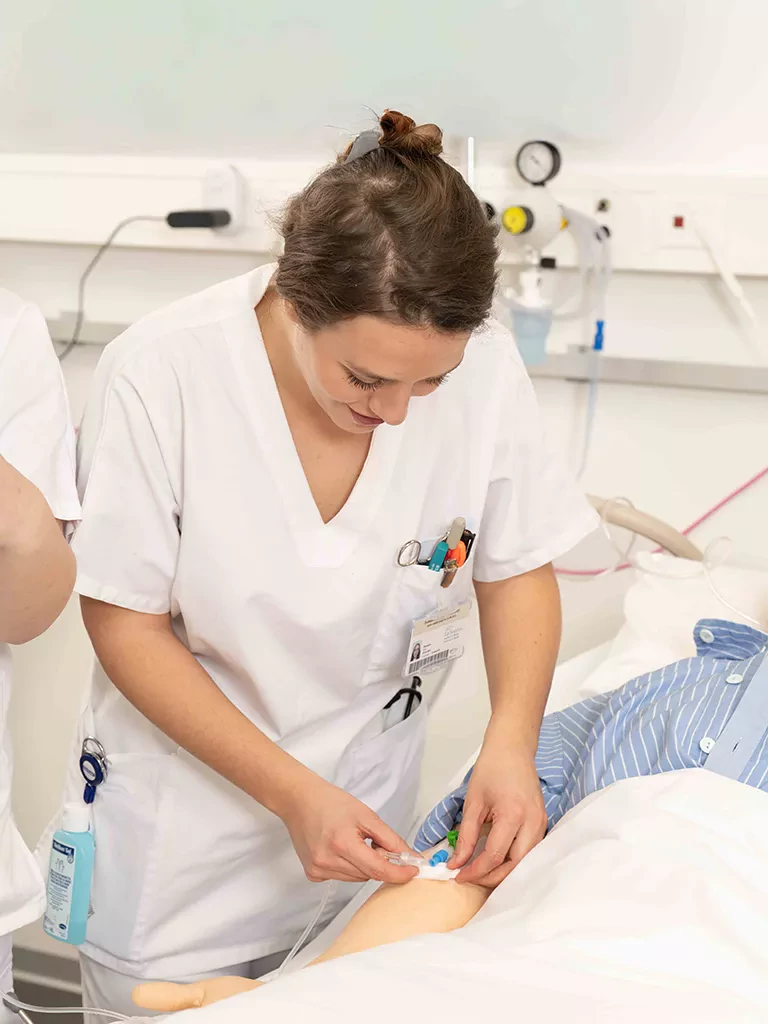
Simulation enables future healthcare professionals to practise in situations that closely resemble real life, in complete safety and with leeway to make mistakes. It helps them to acquire essential skills, techniques and behaviours, while preparing them for teamwork and for managing complex situations.
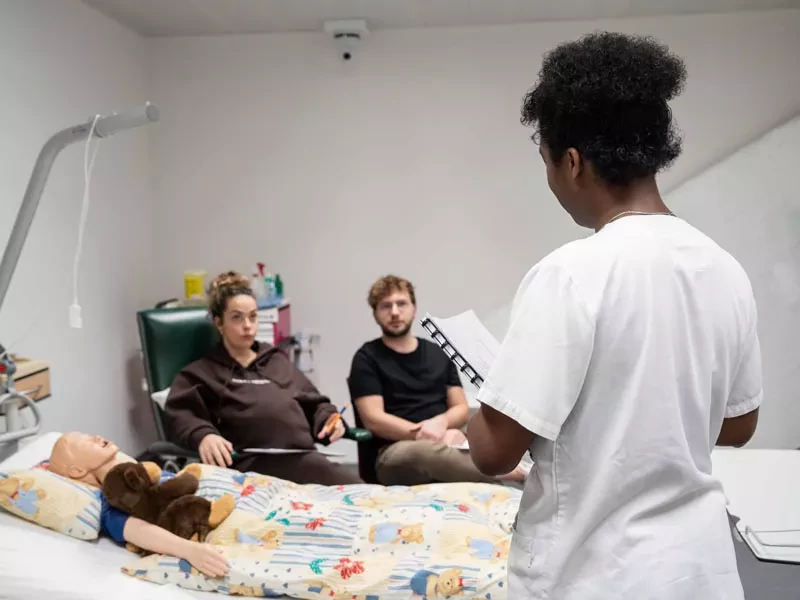
Through supervised role-play scenarios, professionals can experiment, make mistakes, refine and adjust their practices and make improvements without putting patients at risk.
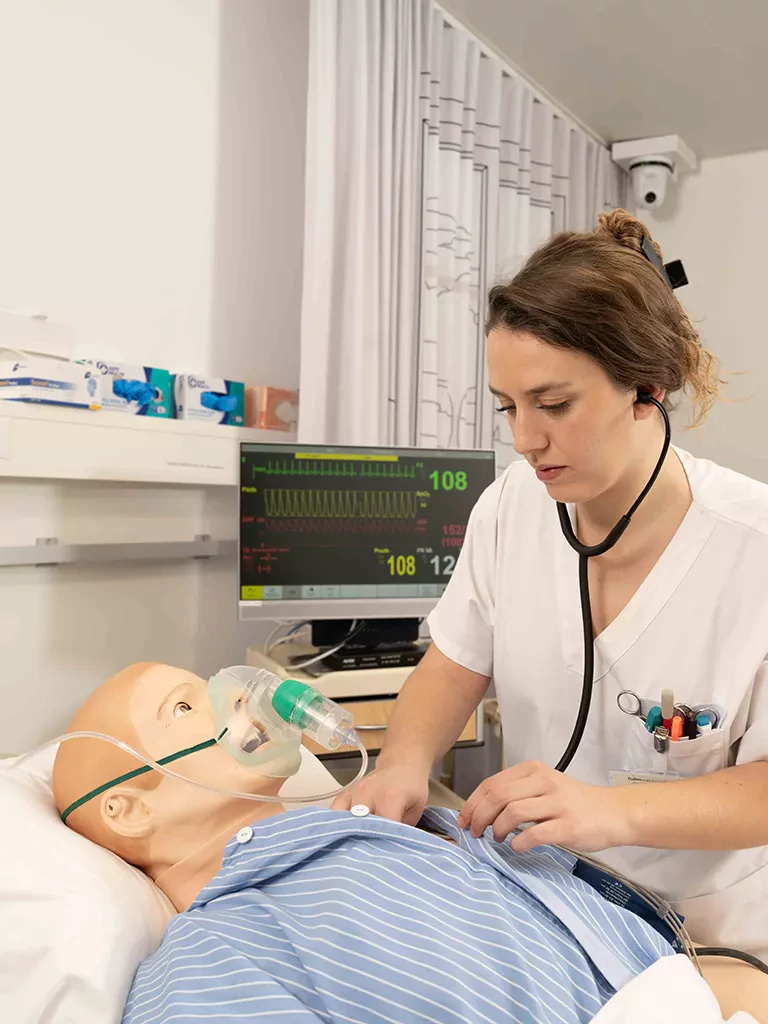
This active teaching approach increases learner engagement , builds their confidence and brings about a lasting improvement in the quality of care.
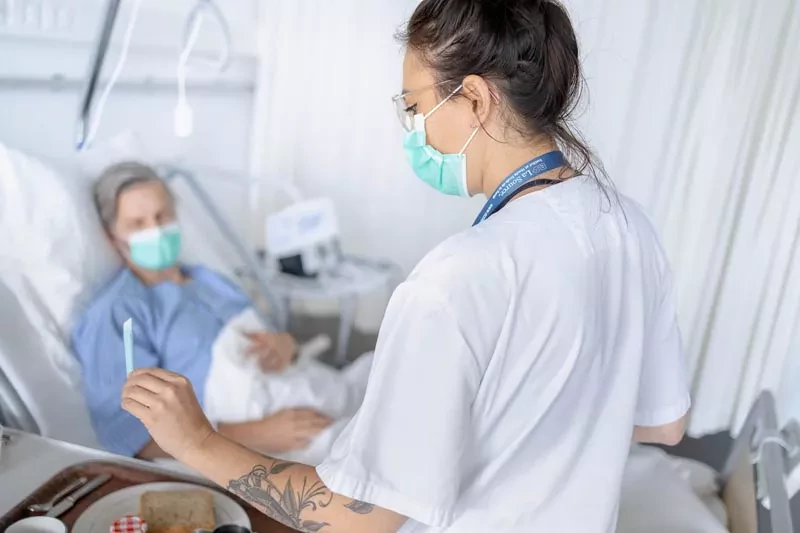
The inclusion of simulated patients further enhances this experience by adding an essential human dimension centred on communication, empathy and the care relationship.
Used in initial training specialised training or continuing professional development it draws on a variety of complementary tools to enhance the quality of learning and, ultimately, improve patient care. It is a genuine, realistic clinical training environment where students can practise, analyse and develop their skills without causing harm to patients.
What expertise does La Source have in simulation?
La Source offers over 20 years’ expertise in simulation at your service. It is renowned for:
Its varied immersive experiences covering a wide range of nursing scenarios
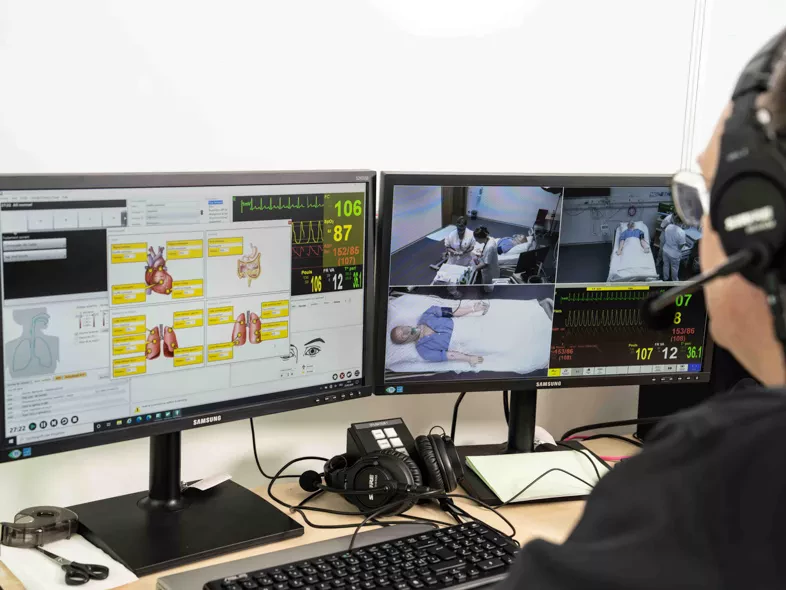
Its state-of-the-art facilities, including a simulated hospital in an area of 2'500m2 a professional control room and high-fidelity manikins
its bespoke support from a team of professionals throughout the simulation programme
Testimonials about HOPIM
Frequently Asked Questions
What are the benefits of simulation in nursing education?
What are the benefits of simulation in nursing education?
Simulation enables future healthcare professionals to practise in situations that closely resemble real life, in complete safety and with the freedom to make mistakes. It helps them to acquire essential skills, techniques and behaviours, while preparing them for teamwork and for managing complex situations.
Learning in complete safety, without any risk to patients.
What are the benefits for students of learning with simulated patients?
What are the benefits for students of learning with simulated patients?
Practising in a realistic setting, with a person capable of replicating clinical signs, emotions, body language and the complexity of a consultation
Developing essential clinical skills, including carrying out a structured physical examination (non-invasive)
Improving communication skills: giving information, listening, supporting and adapting the language used, while taking the patient’s needs and reactions into account
Practising the care relationship, particularly in sensitive or emotionally charged situations
Become a simulated patient at La Source